This page is about the most oft repeated words to have been uttered by mankind for the last 15 centuries. Those words make up the first short chapter of the Holy Quran which are now being recited formally about 15 billion times per day, and informally unknown hundreds of billions more times. The original version of the first section below stems from the work of the famous Islamic scholar Moulana Syed Abul Ala Moududi (1903–1979). We didn’t know him but as with everyone, if he truly had things right in regard to God, rewards for the best of his efforts to educate others will follow him.
One of the main topics that he and countless other thinkers across history have noted as the primary facet of the human experience is our ability to reason. They and we do so because it’s the only thing that really sets us apart from the animal kingdom. The ability and propensity to use our gift of reason is what makes us different and RESPONSIBLE for our actions and subject to JUDGEMENT for them. Aside from mankind, no other creature bears this proverbial cross!
And all authentic scriptures convey identical messages without any contradictions about our ability to reason and how God “highly recommends” that we use it as much as possible. Few will realize it right away, but this is the real meaning behind what we’ve all been told is “freewill”, a word which is to be found exactly nowhere in any authentic scripture. And the reason is simple, God would never tell us it’s ok to go “willy nilly” in life because all of our actions have consequences which of course include good and bad ones! He would never want anything less than Good for any souls of His Creation.
Indeed, most ideas of freewill we’ve all been instilled with didn’t originate From God, they came from the enemies to humanity! In fact you may already be familiar with one of their favorite and most revered sayings, that being the satanic motto of “do what thou wilt.” And from that it is easy to see the difference between God giving us the ability to reason and telling us to use it wisely versus telling us to “do whatever we want.” At the end of the day it all comes down to choosing wisely or poorly, and bearing the consequences. That is the real idea behind “the freedom of choice” and the following verse might be the best of all for telling it like it is; (words in italics are from this author)
Quran 18:29 And say: All Truth is From your Lord.
Then whoever wills
let them believe it and become more enlightened
and whoever wills
let them deny it and become more confounded.
What that’s saying goes deep but the take away here is that it doesn’t matter to anyone but the one who’s “putting it on the line” with their choice to either use reason, or not. There is the real meaning and Advice From God about so called “freewill” and discernment of Truth. The first of Great Truths God Gave us to consider in the Quran is as follows;
Surah/Chapter 1. called “Al Fatihah” (The Opening)
THAT NAME OF THE CHAPTER
“Fatihah” (Opening) is that which opens a subject or a book or any other thing. In other words, Al-Fatihah is a sort of preface. Hence, this first Surah/Chapter of the Holy Quran is named Al-Fatihah.
PERIOD OF REVELATION
It is one of the very earliest telepathic Revelations to the Holy Prophet from the angel Gabriel which would then continue for the next 23 years until the entire Quran had been delivered. As a matter of fact, we learn from authentic Traditions that it was the first complete Surah/Chapter which was revealed to Muhammad. Before this, only a few miscellaneous verses were provided, which form parts of other Surahs/Chapters such as Alaq, Muzzammil, Muddaththir, etc.
THEME
This Surah is in fact a prayer which YHWH has taught to all those who want to make a study of His book. It has been placed at the very beginning of the book to teach a lesson to the reader: If you sincerely wish to benefit from Gods’ Help in doing anything, especially studying any body of scripture, you should offer this prayer to YHWH at the onset.
This preface we’re talking about is meant to create a strong desire in the heart of the reader to seek guidance from YHWH, Who Alone Can Grant it. Thus Al-Fatihah indirectly teaches that the best thing for us is to pray for guidance to the straight path, to study the Quran with the mental attitude of a seeker- after-truth and to recognize the fact that God is the source of all knowledge. Indeed therefore, one should begin the study of the Quran with a prayer to Him for Guidance.
From this theme, it becomes clear that the real relation between Al-Fatihah and the Quran is not solely that of an introduction to a book, but more importantly that of a prayer and its answer. Al-Fatihah is the prayer from the servant and the Quran is the answer from the Master to their prayer. The servant prays to YHWH to show him guidance and the Master places the whole of the Quran before Him in answer to their prayer, as if to say, “This is the Guidance you begged from Me.” Here is Abrahams’ Contact prayer (Quran 14:37-40) with Gods’ Actual Name of YHWH (Arabic يَهْوَه ) which was used by all the prophets after him (mostly in Hebrew as יהוה), and later formally given to Mohamet to relay to the rest of mankind, then translated by me, David Allender circa 2016;
1:1 In The Name Of YHWH; The Almighty, The Merciful.
1:2 All praise to You
Lord of the Worlds;
1:3 The Merciful, The Compassionate.
1:4 The Only Master of Judgement Day.
1:5 You Alone we serve
and to You Alone we Pray for help.
1:6 Guide us on the Straight Path.
1:7 The Path of those who have Your Blessing
not the ones with whom You’re Angry
nor the rest who go astray.
~ Thank You YHWH ~ In Whose Name we take refuge from the accursed.
The more contemporary version of the prayer commonly found in previous English translations, (which this first portion of the article was originally written for) is as follows:
“In the name of Allah, the Beneficent, the Merciful. Praise is only for Allah, the Lord of the Universe, the All-Beneficent, the All-Merciful, the Master of the Day of Judgment. Thee alone we worship and to Thee alone we pray for help. Show us the straight way, the way of those whom Thou hast blessed; who have not incurred Thy wrath, nor gone astray.”
While recalling the prayer is actually made up of seven verses as numbered above, let us break it down into 10 distinct parts;
1 In the name of Allah, the Beneficent, the Merciful.
Islamic culture requires us to commence everything with the actual name of God/Allah which is in fact YHWH. Hence, the new version of the prayer found in the Quran For Christians. If this is done consciously and sincerely, it will surely produce three good results. First, it will keep us away from evil, because the very name of YHWH will impel one to consider whether they are justified in associating His Name with a wrong deed or an evil intention. Secondly, the very mention of the Name Of YHWH will create the right attitude of mind and direct us to the right direction. Thirdly, we will receive Gods’ help and blessing and will be protected from the temptations of the jinn (aka “demons” of the Bible and “asura” of the Vedas), for YHWH turns to us when we turn to Him!
2 Praise is only for Allah,
It has been stated in the Introduction to this Surah that AI-Fatihah is a prayer. It begins with the praise of YHWH to Whom it is addressed in order to teach us the right way of making a supplication. We should not put forward our request bluntly and abruptly without an appropriate introduction. The right way is to acknowledge the excellences and the favors and the high position of the One to Whom we address our prayer. That is why we begin our prayer with the praise of YHWH, for He is the perfection of all excellences and is also our Benefactor. We pay homage to Him to show that we sincerely acknowledge His excellences and also are grateful to Him for His countless favours. It should also be noted that not only Praise is for YHWH but also Praise is only for YHWH. This distinction is very important because it cuts at the root of the erring worship of any of His creation. As none of them are worthy of praise, none worthy of worship. No man, no angel, no prophet, no so-called god, no star, no idol, in short, none of His creation inherently possesses any good quality that wasn’t given by God. Hence the Creator of these qualities alone deserves devotion, worship, gratitude, NOT any of His creation.
3 the Lord of the Universe,
The word Rab which has been translated into `Lord’ stands for (a) Master and Owner, (b) Sustainer, Provider and Guardian, (c) Sovereign, Ruler, Administrator and Organizer. God/Allah is the Lord of the Universe in all these senses
4 the All-Beneficent, the All-Merciful,
Another major change made to the Prayer for the QFC is the use of “Almighty” instead of “Beneficent”. The reason why this change was made can only be guessed at, for Only God Really Knows. That said, it was done with extreme care, caution and respect by the author. In fact, it took a full months worth of “double time” in consideration to finish said QFC translation of the Prayer. As to the original; Although the Arabic word “Rahman” (Beneficent) itself is in the superlative form and denotes the attributes of beneficence and mercy in the highest degree, even this word fails to express the boundless extent of these attributes of God/Allah. Hence another word “Rahim” (Merciful) of the same Arabic root has been added to make up for the deficiency
5 the Master of the Day of Judgment.
After saying that God Is Beneficent and Merciful, it has immediately been added that He is the Master of the Day of Judgment, so that the qualities of mercy and kindness might not mislead anyone into forgetting that on that Day He will gather together all human beings and jinn (together “mankind”) from the first to the last and require each and every one to give an account of all of one’s acts to Him. A believer should, therefore, always keep in view the fact that God is not only Merciful, but He is also Just. He has, however, full authority to pardon or punish anyone He pleases, for He has complete power over everything. Therefore we should have full conviction that it lies absolutely in His power to make our end happy, or sorrowful, each to the most extremes imaginable.
6 Thee alone we worship
The Arabic word “ibadat” (worship) is used in three senses: (a) worship and devotion, (b) submission and obedience, (c) subjection and servitude. Here it implies all the three, that is, We are Thy worshipers, Thy subjects and Thy slaves and We keep these relations with Thee and Thee alone and “We make none else the object of our worship in all the three senses.” This word has also been exchanged in the QFC for “Almighty” and once again we can’t say for certain why. One guess would be it’s like the case of the mentions of Gods’ Forgiveness, Mercy, Compssion, etc. in the Quran which are many in the first half and then dwindling down to none towards the end. This is indicative of the times we’re living in and the fact that the chance for ones’ repentance is growing slimmer by the day as we await the widespread public awareness of the Al-Mahdi and the QFC. At that time, there will be no more chances for anyone to repent and only Gods’ Wrath and Justice will be seen in the world. Hence, “Almighty” instead of “Beneficent”.
7 and to Thee alone we pray for help.
It means, We ask for Thy help because we know that YHWH Is The Lord of the whole Universe and Has all powers and Is the Master of everything. Therefore we turn to YHWH for help for the fulfillment of our needs and requirements
8 Show us the straight way,
That is, “Show us that way which may lead us aright in every walk of life and keep us absolutely free from errors and evil consequences and bring us success in the end.” This is the request which the servant of God makes to Him upon the study of the Qur’an. We pray to Him to guide us in every walk of life and save us from the labyrinths of doubt and uncertainty, which result from the lack of true knowledge and/or being deceived. The servant also requests the Master to show them the right and the straight way of life from among the many by-paths and crooked ways.
9 the way of those whom Thou hast blessed;
The straight way for which we are praying is the way which has always been followed by the people favored by God and which has always brought us His favors and blessings.
10 who have not incurred Thy wrath, nor gone astray.
This is to show that the favored people are not those who go astray and incur Gods’ wrath, though apparently they might be enjoying the transitory good things of life. The really favored people are those who receive blessings on account of their righteous living. From this it also becomes clear that by favors are meant those real and permanent rewards, which result from righteous living and from winning Gods’ Contentment, and not those transitory good things of life which have been enjoyed even by the tyrants and worshipers of mammon (wealth, possessions, money, power, etc.), and which are being enjoyed even today by all sorts of evildoers who have gone astray from the straight way.
The Meaning of Al-Fatihah and its other Names:
Since this prayer is formally recited by all practicing Muslims 5 times per day, (and countless more times informally throughout their days) there is no other short collection of words on Earth that have been uttered as many times, or as often to this day. This is also the Surah with which many other prayers are begun by billions of Muslims around the world. And another name for it is “Umm Al-Kitab” (the Mother of the Book) according to the majority of the scholars. In an authentic Hadith/Saying recorded by At-Tirmidhi, who graded it authentic, Abu Hurayrah said that Mohamet, the Messenger of God/Allah said;
Al-Hamdu lillahi Rabbil-Alamin is the Mother of the Qur’an, the Mother of the Book, and the seven repeated Ayat/verses of the Glorious Qur’an. It is also called Al-Hamd and As-Salah, because the Prophet said that his Lord told him;
The prayer (Al-Fatihah) is divided into two halves between Myself and My servants. Indeed, the Prayer is a discourse between man and his Creator! It is as if . . .
When the servant of God says;
1:1 In The Name Of YHWH; The Almighty, The Merciful.
YHWH Responds; My servant shall now find greater success in whatever they’re about to do!
And when the servant says;
1:2 All praise to You, Lord of the Worlds.
YHWH Responds; My servant has praised Me for My Goodness, and I reciprocate.
And when the servant says;
1:3 The Merciful, The Compassionate.
YHWH Responds; My servant knows and trusts me like their best friend, and that I Shall Be!
And when the servant says;
1:4 The Only Master of Judgement Day.
YHWH Responds; My servant has handed the most important of all matters over to Me.
And when the servant says;
1:5 You Alone we serve and to You Alone we Pray for help.
YHWH Responds; Indeed this is between Myself and My servants alone, whom I indeed Will Help!
And when the servant says;
1:6 Guide us on the Straight Path.
YHWH Responds; Since you asked, I Will Guide you through the many challenges, pitfalls and traps in this life.
And when the servant says;
1:7 The Path of those who have Your Blessing
not the ones with whom You’re Angry
nor the rest who go astray.
YHWH Responds; Yea, of those only 3 kinds, it is only you who shall have My Blessing!
And when the servant says;
~ Thank You YHWH ~ With Whom I seek refuge from the accursed ones.
YHWH Responds; Kudos to My Servant, the thanks you have given goes against the wishes of your enemies. And the refuge you seek shall be given in direct correlation to how often you think of Me and seek it!
Al-Fatihah was called the Salah, because reciting it is a condition for the correctness of Salah – the prayer. Al-Fatihah was also called Ash-Shifa’ or “The Cure”. It is also called Ar-Ruqyah “The Remedy” since there is the narration of Abu Sa`id telling the the story of the Companion who used Al-Fatihah as a remedy for a tribal chief who was poisoned.
Al-Fatihah was revealed in Makkah as Ibn `Abbas, Qatadah and Abu Al-Aliyah stated. YHWH said:
And indeed, We have bestowed upon you the seven Mathani (repeatedly recited verses). Quran 15:87
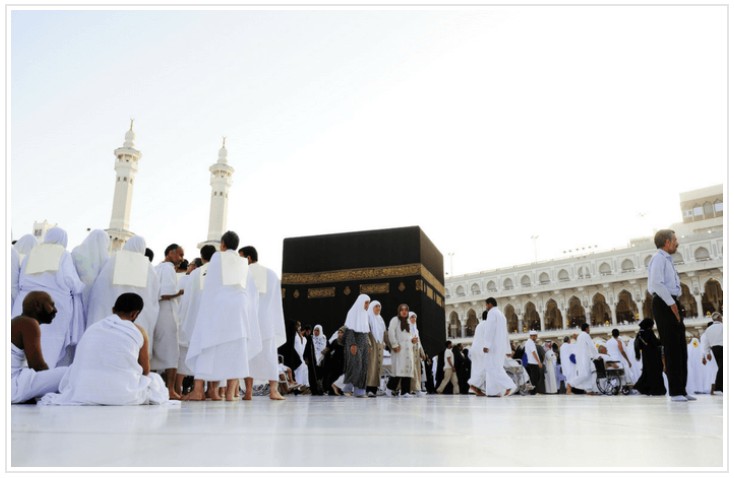
The prayer is called the “salah” and is a special part of worship that is the second most important pillar of Islam after the “shahada” (ones’ testimony of faith in that there is Only The One God, Mohamet was His Last Prophet and every soul will be raised alive to face Judgement).
Salah is an obligatory form of prayer performed five times a day by many believers today. As is True with all previous scriptures, there are also multiple verses in the Holy Quran where YHWH tells us about the importance of prayer. Here are two:
Those who hold fast to the Commandments and uphold the Prayer, We do not withhold the wages of these who do Right. Quran 7:170
So recite thou what is given to thee of the Book and uphold the Prayer. Indeed the Prayer staves off much depravity and even sexual immorality. For the Remembrance of God is greatest in usefulness and never forget God Knows Everything you do. Quran 29:45
The salah involves a number of physical movements – standing, bowing, prostrating, and sitting (which together are proven to be very beneficial to ones’ health, specifically for remaining limber, aiding in digestion and providing extra bloodflow to the brain). It also involves the recitation of verses from the Holy Quran in Arabic along with a number of dua (supplications).
Muslims face the direction of the Kaba, the Sacred House of YHWH in Mecca, whenever they perform their prayer. The physical movements, recitations, and supplications are all done to show earnestness, humility and submission to the unimaginable omnipotence and omniscience of YHWH, The Creator, Overseer and Sustainer of everything and everyone, in this universe/realm.

Of course this is nothing new, i.e. “Going a little farther Jesus fell down on his face and prayed.” Matthew 26:39
Others such as David, Daniel, Solomon, Elijah, Ezra, Peter and Paul are all mentioned kneeling or similarly “falling on their faces” to pray.
Why do Muslims Pray Salah?
The reason why Muslims pray at all relates to what Islam considers to be the purpose of this life – to worship YHWH alone in order to succeed at obtaining Real Life, for Eternity. Shortly after Muhammad became a Prophet, the performance of salah was one of the first commandments given to him by YHWH. Later, God Almighty tells us through him in the Holy Qur’an that mankind was created for said purpose;
And I (YHWH ) created not the jinn and humans except they should worship Me (Alone and succeed). Quran 51:56
The salah is the second pillar of Islam and it is a critical part of a Muslim’s faith. One of the biggest differences between a Muslim and a non-Muslim is the salah. Our beloved Prophet said: “Between a man and polytheism and disbelief there only stands his neglect of the prayer.”
Why Do Muslims Pray 5 Times a Day?
This question is quite common and many people do not know one of the reasons of where the number five came from. When Muhammad became a Prophet at the age of forty, one of the first things he was taught was how to pray. YHWH sent the angel Gabriel to teach him how to make wudu (bathe/cleanse oneself) and perform the salah.
Some 11 years after the beginning of prophethood a miraculous journey took place in which the angel Gabriel took Muhammad to the first heaven. It was during this event that YHWH commanded him and the Muslims to pray five times a day. This event was recorded in the Holy Qur’an and we also have authentic narrations from the Prophet himself that he undertook this journey.
The full story of the Prophet’s ascent to heaven is known as Isra and Mi’raj for which an entire chapter of the Quran is dedicated. It is a lengthy story which we will not go into more detail than as follows with the last part where the commandment to pray five times a day was given. Up until that point in history believers would perform salah, but there was no specific number of times legislated.
The Story of Isra and Mi’raj
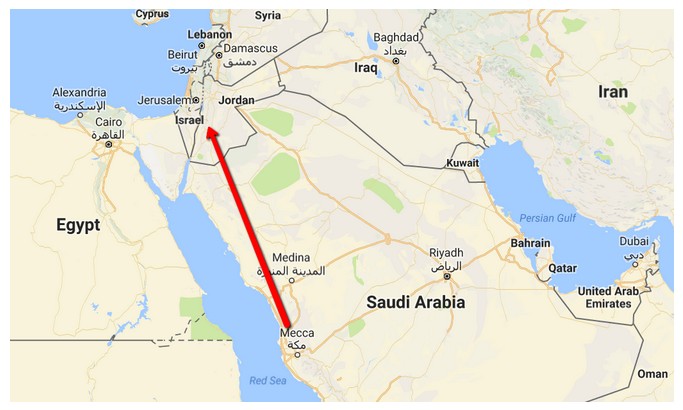
Exalted is He who took His Servant (Prophet Muhammad) by night from al-Masjid al-Haram (In Mecca) to al-Masjid al- Aqsa (in Jerusalem), whose surroundings We have blessed, to show him of Our signs. Indeed, He is the Hearing, the Seeing. Quran 17:1
The last part of the Isra and Mi’raj story begins at the moment the angel Gabriel brings Muhammad from Mecca to Jerusalem, and then to the gates of the first level of heaven:
When I (Muhammad) reached the nearest heaven. Gabriel said to the heaven gatekeeper, ‘Open the gate.’ The gatekeeper asked, ‘Who is it?’ He said, ‘Gabriel.’ The gatekeeper asked,’ Who is accompanying you?’ Gabriel said, ‘Muhammad.’ The gatekeeper said, ‘Has he been called?’ Gabriel said, ‘Yes.’ Then it was said, ‘He is welcomed. What a wonderful visit his is!’ Then I met Adam and greeted him and he said, ‘You are welcomed O son and Prophet.’
Then we ascended to the second heaven. It was asked, ‘Who is it?’ Gabriel said, ‘Gabriel.’ It was said, ‘Who is with you?’ He said, ‘Muhammad.’ It was asked, ‘Has he been sent for?’ He said, ‘Yes.’ It was said, ‘He is welcomed. What a wonderful visit his is!” Then I met Isa (Jesus) and Yahya (John the Baptist) who said, ‘You are welcomed, O brother and a Prophet.’
Then we ascended to the third heaven. It was asked, ‘Who is it?’ Gabriel said, ‘Gabriel.’ It was asked, ‘Who is with you? Gabriel said, ‘Muhammad.’ It was asked, ‘Has he been sent for?’ ‘Yes,’ said Gabriel. ‘He is welcomed. What a wonderful visit his is!’ (The Prophet added:). There I met Joseph (Yusuf) and greeted him, and he replied, ‘You are welcomed, O brother and a Prophet!’
Then we ascended to the 4th heaven and again the same questions and answers were exchanged as in the previous heavens. There I met Idris and greeted him. He said, ‘You are welcomed O brother and Prophet.’
Then we ascended to the 5th heaven and again the same questions and answers were exchanged as in previous heavens. There I met and greeted Aaron (Harun) who said, ‘You are welcomed O brother and a Prophet”.
Then we ascended to the 6th heaven and again the same questions and answers were exchanged as in the previous heavens. There I met and greeted Moses (Musa) who said, ‘You are welcomed O brother and a Prophet.’ When I proceeded on, he started weeping and on being asked why he was weeping, he said, ‘O Lord! Followers of this youth who was sent after me will enter Paradise in greater number than my followers.’
Then we ascended to the seventh heaven and again the same questions and answers were exchanged as in the previous heavens. There I met and greeted Abraham who said, ‘You are welcomed O son and a Prophet.’
Then I was shown al-Bait al-Ma’mur (i.e. God’s House). I asked Gabriel about it and he said, This is al-Bait al-Ma’mur where 70,000 angels perform prayers daily and when they leave they never return to it (but always a new group comes into it daily).’
Then I was shown Sidrat al-Muntaha (i.e. a tree in the seventh heaven) and I saw its Nabk fruits which resembled the clay jugs of Hajr (i.e. a town in Arabia), and its leaves were like the ears of elephants, and four rivers originated at its root, two of them were apparent and two were hidden. I asked Gabriel about those rivers and he said, ‘The two hidden rivers are in Paradise, and the apparent ones are the Nile and the Euphrates.’
Then fifty prayers were enjoined on me. I descended till I met Moses who asked me, ‘What have you done?’ I said, ‘Fifty prayers have been enjoined on me.’ He said, ‘I know the people better than you, because I had the hardest experience to bring the Israelites to obedience. Your followers cannot put up with such obligation. So, return to your Lord and ask Him (to reduce the number of prayers).’ I returned and asked YHWH (for reduction) and He made it forty. I returned and (met Moses) and had a similar discussion, and then returned again to YHWH for reduction and He made it thirty, then twenty, then ten, and then I came to Moses who repeated the same advice. Ultimately YHWH reduced it to five.
When I came to Moses again, he said, ‘What have you done?’ I said, ‘YHWH has made it five only.’ He repeated the same advice but I said that I surrendered (to God’s Final Order)’” God’s Apostle was addressed by YHWH , “I have decreed My Obligation and have reduced the burden on My servants, and I shall reward a single good deed as if it were ten good deeds. — Sahih al-Bukhari, volume 4, Book 54, Hadith number 429
Rewards and Benefits of Praying Salah
Connection
Maintain connection with YHWH throughout the day
Reward
The reward for one prayer counts as ten prayers
Forgiveness
Sins are washed away and forgiven
Good Behaviour
Keeps you away from immorality and evil deeds
Remembrance
Helps you grow and maintain remembrance of YHWH and God consciousness
There are plenty of rewards and benefits to the prayer that were not listed in the graphic.
It strengthens your faith and influences you to do more good deeds. It creates strong bonds of unity among believers, especially when the prayer is performed as a congregation. It also serves as an excellent relief for stress, worry, and depletion of ones spirit.
Those who believe and whose hearts find fullness in the remembrance of God. Yea in the remembrance of God do hearts find fullness. Quran 13:28
1:1 In The Name Of YHWH; The Almighty, The Merciful.
1:2 All praise to You
Lord of the Worlds;
1:3 The Merciful, The Compassionate.
1:4 The Only Master of Judgement Day.
1:5 You Alone we serve
and to You Alone we Pray for help.
1:6 Guide us on the Straight Path.
1:7 The Path of those who have Your Blessing
not the ones with whom You’re Angry
nor the rest who go astray.
~ Thank You YHWH ~ In Whose Name we take refuge from the accursed.
The Contact Prayer (Salat) Originated From Abraham
God commands believers to follow the religion of Abraham. This is specifically in regard to the ritualistic practices of Abraham.
Quran 16:123 Then we inspired you (Muhammad) to follow the religion of Abraham, the monotheist; he never was an idol worshiper.
ثُمَّ أَوْحَيْنَا إِلَيْكَ أَنِ اتَّبِعْ مِلَّةَ إِبْرَاهِيمَ حَنِيفًا وَمَا كَانَ مِنَ الْمُشْرِكِينَ
All the practices of Submission (Islam) came from Abraham including Hajj (pilgrimage), Salat (Prayer), Zakat (Charity), and Sayem (Fasting). This is further confirmed as we see that the only prophet that God taught how to perform the Salat was Abraham.
Quran 21:73 We made them leaders who guided in accordance with our commandments, and we taught them how to work righteousness, and how to observe the Contact Prayers (Salat) and the obligatory charity (Zakat). To us, they were devoted worshipers.
وَجَعَلْنَاهُمْ أَئِمَّةً يَهْدُونَ بِأَمْرِنَا وَأَوْحَيْنَا إِلَيْهِمْ فِعْلَ الْخَيْرَاتِ وَإِقَامَ الصَّلَاةِ وَإِيتَاءَ الزَّكَاةِ وَكَانُوا لَنَا عَابِدِينَ
Additionally, we never see Noah, who preceded Abraham, performing the Salat, but we do see that all the prophets since Abraham performed these rituals (Abraham, Ishmael, Isaac 14:40, Jesus 19:31, Moses & Aaron, Children of Israel 2:83, 5:12, 7:156, etc.).
Indeed, Abraham, Ishmael, Isaac Performed The Contact Prayer (Salat)
Quran 14:35-40 Recall that Abraham said, “My Lord, make this a peaceful land, and protect me and my children from worshiping idols. “My Lord, they have misled so many people. As for those who follow me, they belong with me. As for those who disobey me, You are Forgiver, Most Merciful. “Our Lord, I have settled part of my family in this plantless valley, at Your Sacred House. Our Lord, they are to observe the Contact Prayers (Salat), so let throngs of people converge upon them, and provide for them all kinds of fruits, that they may be appreciative. “Our Lord, You know whatever we conceal and whatever we declare— nothing is hidden from GOD on earth, nor in the heavens. “Praise be to GOD for granting me, despite my old age, Ismail and Isaac. My Lord answers the prayers. “My Lord, make me one who consistently observes the Contact Prayers (Salat), and also my children. Our Lord, please answer my prayers.
وَإِذْ قَالَ إِبْرَاهِيمُ رَبِّ اجْعَلْ هَٰذَا الْبَلَدَ آمِنًا وَاجْنُبْنِي وَبَنِيَّ أَنْ نَعْبُدَ الْأَصْنَامَ رَبِّ إِنَّهُنَّ أَضْلَلْنَ كَثِيرًا مِنَ النَّاسِ ۖ فَمَنْ تَبِعَنِي فَإِنَّهُ مِنِّي ۖ وَمَنْ عَصَانِي فَإِنَّكَ غَفُورٌ رَحِيمٌ رَبَّنَا إِنِّي أَسْكَنْتُ مِنْ ذُرِّيَّتِي بِوَادٍ غَيْرِ ذِي زَرْعٍ عِنْدَ بَيْتِكَ الْمُحَرَّمِ رَبَّنَا لِيُقِيمُوا الصَّلَاةَ فَاجْعَلْ أَفْئِدَةً مِنَ النَّاسِ تَهْوِي إِلَيْهِمْ وَارْزُقْهُمْ مِنَ الثَّمَرَاتِ لَعَلَّهُمْ يَشْكُرُونَ رَبَّنَا إِنَّكَ تَعْلَمُ مَا نُخْفِي وَمَا نُعْلِنُ ۗ وَمَا يَخْفَىٰ عَلَى اللَّهِ مِنْ شَيْءٍ فِي الْأَرْضِ وَلَا فِي السَّمَاءِ الْحَمْدُ لِلَّهِ الَّذِي وَهَبَ لِي عَلَى الْكِبَرِ إِسْمَاعِيلَ وَإِسْحَاقَ ۚ إِنَّ رَبِّي لَسَمِيعُ الدُّعَاءِ رَبِّ اجْعَلْنِي مُقِيمَ الصَّلَاةِ وَمِنْ ذُرِّيَّتِي ۚ رَبَّنَا وَتَقَبَّلْ دُعَاءِ
Moses, Aaron, And The Children of Israel Performed The Contact Prayer (Salat)
Quran 2:83 We made a covenant with the Children of Israel: “You shall not worship except GOD. You shall honor your parents and regard the relatives, the orphans, and the poor. You shall treat the people amicably. You shall observe the Contact Prayers (Salat) and give the obligatory charity (Zakat).” But you turned away, except a few of you, and you became averse.
وَإِذْ أَخَذْنَا مِيثَاقَ بَنِي إِسْرَائِيلَ لَا تَعْبُدُونَ إِلَّا اللَّهَ وَبِالْوَالِدَيْنِ إِحْسَانًا وَذِي الْقُرْبَىٰ وَالْيَتَامَىٰ وَالْمَسَاكِينِ وَقُولُوا لِلنَّاسِ حُسْنًا وَأَقِيمُوا الصَّلَاةَ وَآتُوا الزَّكَاةَ ثُمَّ تَوَلَّيْتُمْ إِلَّا قَلِيلًا مِنْكُمْ وَأَنْتُمْ مُعْرِضُونَ
Quran 5:12 GOD had taken a covenant from the Children of Israel, and we raised among them twelve patriarchs. And GOD said, “I am with you, so long as you observe the Contact Prayers (Salat), give the obligatory charity (Zakat), and believe in My messengers and respect them, and continue to lend GOD a loan of righteousness. I will then remit your sins, and admit you into gardens with flowing streams. Anyone who disbelieves after this, has indeed strayed off the right path.”
وَلَقَدْ أَخَذَ اللَّهُ مِيثَاقَ بَنِي إِسْرَائِيلَ وَبَعَثْنَا مِنْهُمُ اثْنَيْ عَشَرَ نَقِيبًا وَقَالَ اللَّهُ إِنِّي مَعَكُمْ لَئِنْ أَقَمْتُمُ الصَّلَاةَ وَآتَيْتُمُ الزَّكَاةَ وَآمَنْتُمْ بِرُسُلِي وَعَزَّرْتُمُوهُمْ وَأَقْرَضْتُمُ اللَّهَ قَرْضًا حَسَنًا لَأُكَفِّرَنَّ عَنْكُمْ سَيِّئَاتِكُمْ وَلَأُدْخِلَنَّكُمْ جَنَّاتٍ تَجْرِي مِنْ تَحْتِهَا الْأَنْهَارُ فَمَنْ كَفَرَ بَعْدَ ذَٰلِكَ مِنْكُمْ فَقَدْ ضَلَّ سَوَاءَ السَّبِيلِ
Indeed, Jesus Performed the Contact Prayer (Salat)
Quran 19:31 “He made me blessed wherever I go, and enjoined me to observe the Contact Prayers (Salat) and the obligatory charity (Zakat) for as long as I live.
وَجَعَلَنِي مُبَارَكًا أَيْنَ مَا كُنْتُ وَأَوْصَانِي بِالصَّلَاةِ وَالزَّكَاةِ مَا دُمْتُ حَيًّا
All these practices were currently in practice during the time of prophet Muhammad, except that they were polluted with idol worship that needed to be removed from these practices. For instance, we see that the Salat was even in practice at the time of the prophet and conducted by the idol worshipers of Mecca (Quran 8:35 & 9:54).
Quran 8:35 Their Contact Prayers (Salat) at the shrine (Ka’bah) were no more than a mockery and a means of repelling the people (by crowding them out). Therefore, suffer the retribution for your disbelief.
وَمَا كَانَ صَلَاتُهُمْ عِنْدَ الْبَيْتِ إِلَّا مُكَاءً وَتَصْدِيَةً فَذُوقُوا الْعَذَابَ بِمَا كُنْتُمْ تَكْفُرُونَ
Quran 9:54 What prevented the acceptance of their spending is that they disbelieved in GOD and His messenger, and when they observed the Contact Prayers (Salat), they observed them lazily, and when they gave to charity, they did so grudgingly.
وَمَا مَنَعَهُمْ أَنْ تُقْبَلَ مِنْهُمْ نَفَقَاتُهُمْ إِلَّا أَنَّهُمْ كَفَرُوا بِاللَّهِ وَبِرَسُولِهِ وَلَا يَأْتُونَ الصَّلَاةَ إِلَّا وَهُمْ كُسَالَىٰ وَلَا يُنْفِقُونَ إِلَّا وَهُمْ كَارِهُونَ
Based on the above we can conclude that the Contact Prayer was in existence since the time of Abraham, and Muhammad was commanded to follow the religion of Abraham. All believers since are urged to do the same. So, give thanks that we all have what is likely the final version of Abrahams’ Contact Prayer aka “Salat 2.0” to do so!
1:1 In The Name Of YHWH; The Almighty, The Merciful.
1:2 All praise to You
Lord of the Worlds;
1:3 The Merciful, The Compassionate.
1:4 The Only Master of Judgement Day.
1:5 You Alone we serve
and to You Alone we Pray for help.
1:6 Guide us on the Straight Path.
1:7 The Path of those who have Your Blessing
not the ones with whom You’re Angry
nor the rest who go astray.
~ Thank You YHWH ~ In Whose Name we take refuge from the accursed.